Pages

Friday, December 24, 2010

White Miso Ramen - Kura (久楽) Plaza Singapura

This weeks' ramen adventure brings me to Kura (久楽) at Plaza Singapura.

Japan Food Holdings, the company behind the ubiquitous Ajisen Ramen and other Japanese restaurants, opened a multi-brand Japanese food concept call "Tokyo Walker" in Plaza Singapura in November.

Sounds like the name of my blog? Yes it does!
They, just like me, were "inspired" by the series of popular magazine " Walker" in Japan that reports about cool happenings in the cities in Japan.


Interesting that the restaurants inside are not totally Tokyo ... Champon is a dish from Nagasaki, a Udon restaurant is from Osaka...

... and Kura is a Hokkaido ramen franchise!


Kura serves miso ramen in 3 types of misoes - red, white and spicy.
Interestingly, while Kura comes from Hokkaido in the north of Japan, its founder, Okuhara Souji, came from Okinawa that is all the way in the south.
He went to Hokkaido and started trial and error of creating his ideal bowl of ramen.
That explains why Kura doesn't call themselves Hokkaido-style ramen, but rather Okuhara-style (奥原流) ramen.

I've also wrote an email to Kura in Japan, asking them if there are anything in particular that they have customised their offering for the Singapore outlet.
Glad to hear that they have chosen to offer exactly what they are offering in Japan to deliver us the authentic taste.

I ordered the white miso ramen ($12.8) this time.


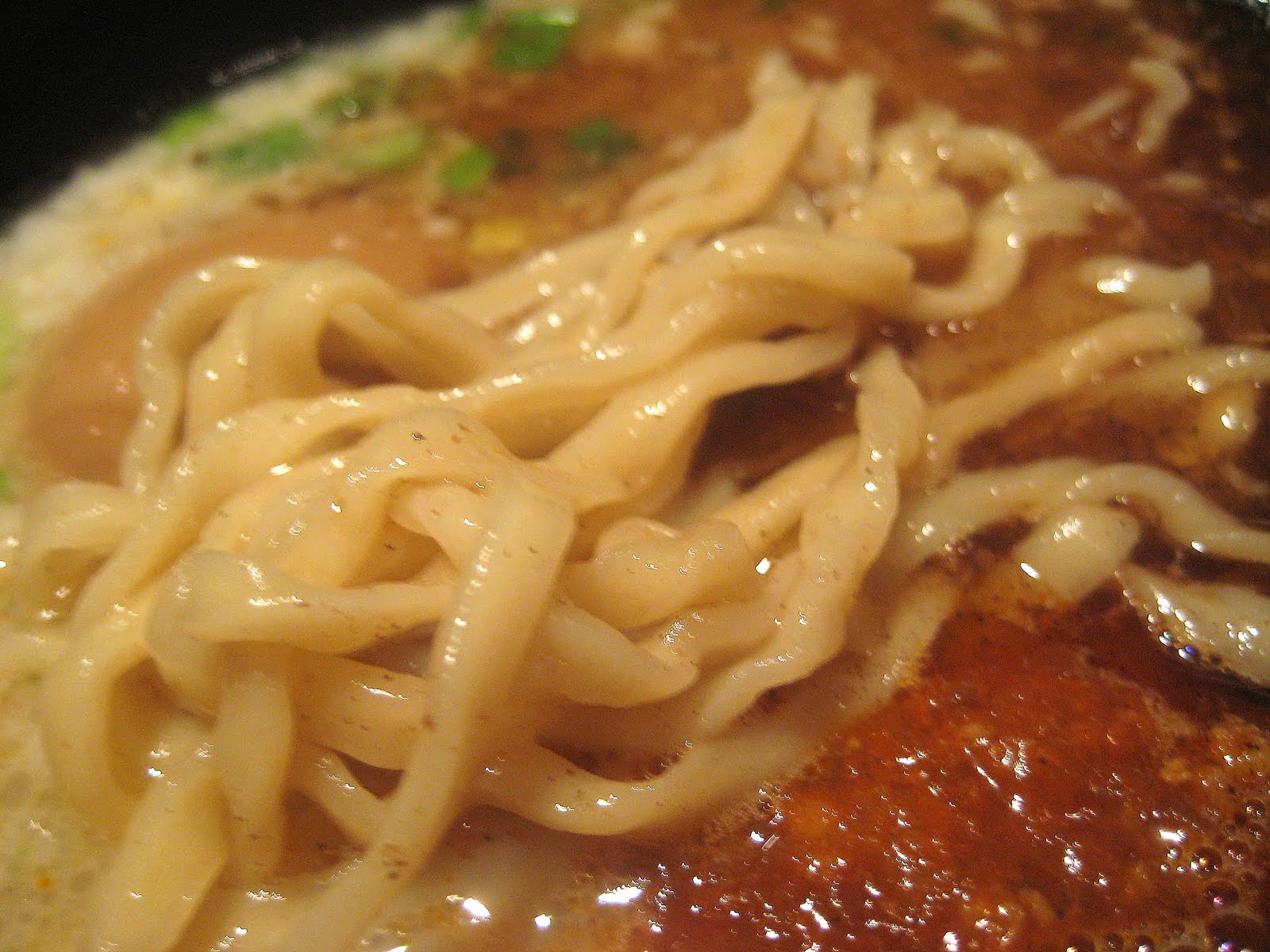
The ramen has a variety of toppings - char siew, tamago, chopped leek and onion, tenkasu (天かす), minced meat, seaweed and a dash of spicy miso paste. This gives the ramen a range of taste and texture when you eat it together with the yellow curly noodles. The white miso soup base, with a mix of pork and chicken stock, tasted good but might be slightly salty for me.

What it could have done better is how they serve it. When the ramen is delivered to me, the seaweed was already soft and sinking. Similar to other concepts that are brought in by franchise, the presentation is far from what the photo shows... making it looks less delicious as it should.

Overall, it is a good bowl of ramen, much better compared to its neighbour. But among the many other ramen stall in Singapore, it might not be the among the top in my list.


View Ramen Walker's Ramen Map in a larger map

Ramen Data - Kura @ Plaza Singapura
Address: #04-01 Plaza Singapura
Types: Miso
Price: S$12.8
Rating: 6.5/10

Monday, December 6, 2010

Ramen in Jakarta! Marutama Ramen - eX Plaza Indonesia

This week's ramen adventure takes me to Jakarta!

Guess what I've found?

the orange basketball...

Marutama Ramen!!!
Didn't know that they have expanded to Indonesia too.

Curious to find out how it fares compared to the Singapore outlets that many Singaporeans like, I have chosen to have lunch here instead.

Marutama ramen already has 2 outlets in Jakarta - one in eX Plaza Indonesia and the other Sentral Senayan I.

I spoke to store manager about the ramen scene in Jakarta. Currently, there are still only 2 ramen chains in the market - Marutama and another one call Ramen 38 (Sanpachi). While the number of shops is still small, its definitely getting popular there.

Interestingly, the manager was trained in Singapore's Marutama, and was well-versed with the other ramen competitors in Singapore!

Back to the main topic, the decor of Marutama's Jakarta outlet is exactly the same as that of Singapore.

stylish and dim interior

The Jakarta menu has some interesting difference, which I guess is to cater to local taste.


For the ramen, you have a choice of whether you want it spicy or not, and whether you want your char siew to be pork or chicken char siew. The Indonesians must like spicy stuff more than Singaporeans (we don't even have this distinction here), and of course they have a larger muslim population too.

... and there are more chili to come.
After you've ordered your ramen, the will give you a small plate of chili padi too. Interesting.


I've ordered the Ebi Ramen (69,000 Rupiah, about $S10), which is a dish not available in most outlets in Singapore.


The soup tasted almost the same as those made in Singapore, but I have a slight feeling that the Singapore branches are better and have a clearer taste. The noodles and char siew were good. The only area that I wish that it could have been better is the prawns. The prawns used were not that fresh.

I'll try to go to Ramen 38 next time I'm in Jakarta.
From Marutama's manager, the best outlet of Ramen 38 is in Kamome Building!


View Ramen Walker's Ramen Map in a larger map

Sunday, November 7, 2010

Keisuke Premium Tonkotsu Ramen @ Keisuke Tokyo

This week's ramen adventure brings me back again to Keisuke, because I was told that...

Keisuke's signature prawn ramen is gone!!

I made my way to Keisuke on a Saturday afternoon, and I noticed something was different.

The photo on the left was taken in March 2010 when Keisuke first opened, and the one on the right last Saturday. Can anyone spot the change?

left - in March, right - in October

Not that the center section of the door curtain was raised...
But, the logo of Keisuke has change!! From

"海老らーめん けいすけ" to "Ramen Dining けいすけ"

The reference of "prawn" was totally removed from the logo of the restaurant.
Thats a major change.
And when I looked at the menu, the reason was obvious.

Keisuke has done a complete overhaul of their menu, and there are no more prawn related items on the menu anymore. Not its signature prawn ramen, nor the prawn wanton, prawn gyoza, prawn fried rice.

The menu is now re-made into that of a typical ramen restaurant - having a spread of the conventional tonkotsu, shoyu, shio and miso ramens, with tonkotsu as its signature. The price range of its menu has also been significantly reduced - from offering its ramen from $14.8-20, it is now $11-14.8.

It might be reflecting Singaporean's liking in Tonkotsu ramen, which is the mainstream here now. It might also showed its rivalry with its same-floor neighbour Nanttutei, which offers tonkotsu ramen at such a price range, and always has a long queue outside.

I tried the new signature ramen, Keisukei Premium Tonkotsu Ramen ($14.8++).


Although its a new item, it retained Keisuke's DNA - its aesthetics. The ramen is visually pleasing - the red bowl and creamy broth is topped with pinkish char siew, green spring onion, blackish seaweed, yellow cheese, while cabbage and reddish-brown spicy minced meat paste.

You can choose the thickness of the tonkotsu soup - strong or light. I chose the strong one and it tasted rich and delicious. The char siew is large - took up almost 1/3 of the bow by a single piece - and is ham-like in its texture. The cheese topping melts when you soak it into the soup, and clings onto the noodles when you pick them up. The tonkotsu soup, cheese and noodle go amazingly well together. After finishing half a bowl, I mixed the spicy minced meat paste into the soup to create the 2nd taste. I've also added extra toppings of bean sprout and onion, which are placed on the table to be used.

seasoned bean sprout and fresh chopped onion

... took half of my wife's egg too

The soup is now more spicy, which I guess many Singaporean will like.

This visit to Keisuke is both poignant and happy. I was encouraged when Keisuke entered the market and tried to offer something differentiated. Its prawn ramen was sophisticated and well presented. The iconic bowl that it used now sits only as decoration on the shelves, and the staff is still wearing uniforms with the old logo. However, the market didn't accept it. It seems that Keisuke overhauled its menu because too many Singaporeans compared it with prawn mee.

On the other hand, I'm also glad that it has flexibly adapted to the market while not loosing its style. The ramen is still one of the most aesthetically pleasing and sophisticated among those in Singapore. It is also a sign that the ramen scene here is getting increasingly competitive, spurring players to change and adapt. We will see more good ramen shops coming our way.

With this change in menu, I recommend the ramen fans in Singapore to revisit them and try their ramen. I was personally satisfied, and will be making my way back to try the rest of the flavours :)

Sunday, October 31, 2010

New Menu at Sapporo Ramen Miharu - Tori-dashi Ramen

I visited one of my regular ramen joints, Miharu, and what a surprise!

There is a flyer on the wall with a big red word "NEW MENU" on it.

They have created a new item on their menu, Tori-Dashi Shio Ramen (鶏ダシ塩らあめん, S$12), or "chicken stock salt ramen" when translated directly in English.

Miharu is known for ramen with rich miso-based broth, so it is interesting that it has created a light ramen on it repertoire. It might be a coincidence that signature dish of the most popular ramen store (by my research), Marutama, is also chicken-based. The ramen scene in Singapore is getting more competitive with many new entrants, so long-established incumbents like Miharu has to adapt too.

Back to the ramen... of course I ordered the new item to try it out.

looks like a yin yang mark ...

The first thing that jumped out of this ramen is the generous topping of spring onion. The green spring onion took up almost half of the bowl. The clear chicken stock was layered with sesame, adding a flagrant smell to the ramen. It was also topped with a portion of menma, seaweed and 3 flavoured quail eggs. Interesting - it is the first time in Singapore that I saw quail eggs being used in ramen.

... a closer look at the quail eggs.

What I like about this ramen was its chicken stock - it is light and clear but yet delectable. It is supposed to be made from chicken from Shiretoko (知床), an area in the east of Hokkaido that is recognised as an UNESCO World Natural Heritage site. In addition, every mouthful of the noodle will come with some spring onion and sesame, which adds a different texture and taste to the noodle.

The quail eggs, unlike the normal egg, was harder and the yoke wasn't runny. I guess because of the small size of the egg, it is hard to control the runniness. Still prefer the usual larger eggs, which Miharu does well in.

And lastly, after I've finished enjoying the ramen until the end, I still feel a little unsatisfied. I realised why after a while... that this ramen has no char siew or meat at all. It will be better if it has 1 or 2 pieces of char siew, or the fillet of the Shiretoko chicken.

All in all, it was a good bowl of ramen, especially suitable if you long for a light bowl after a heavy meal the previous day.

Monday, October 4, 2010

2010 Q3 Unofficial Ramen Ranking Results!

Three-quarter of the year has gone, and its time to release the Q3 unofficial Singapore ramen ranking!

I'm glad that there are more than 100 votes now! The results should be statistically significant :)

The top 3 ramen places in Singapore by popular voting are:

1) Marutama Ramen
2) Santouka
3) Ippudo


It seems that the results have stabilised.

The top 3 positions are still taken by Marutama, Santouka and Ippudo. Marutama maintained its lead over the other 2, while Santouka shook off Ippudo's tie in Q2 and moved up to the 2nd place.

Nantsuttei was emerging sharply in Q2 right after its opening, but the momentum has lost steam since, and it was unable to catch up with the top 3.

And the other stores are pretty far behind.

Coincidentally, Martutama currently has the largest number of outlets in Singapore (excluding the ubiquitous Ajisen). A combination of taste and accessibility might be linked to its popularity here. Wonder what will happen if I put Ajisen on the ranking....

Looking forward to the full year result at the end of the year!

Saturday, September 11, 2010

Ippudo TAO @ UE Square - TAO Kuro

This week's ramen adventure brings me to Ippudo TAO at UE Square, along Mohamed Sultan Road.

It took over the space previously occupied by Ah Yat Seafood... the ramen empire is taking over the abalone world!


Ippudo TAO is Ippudo's second outlet in Singapore. And it is not a simple replicate of its first outlet like the others. It is a new concept store borne out of a collaboration between Ippudo and a Japanese drum group TAO, both originating from Kyushu. It is a collaboration between ramen and art.

How apt this is!
Ramen, an art form itself (to me), is collaborating with another art form.
And art has it commercial angle too, and this collaboration will further push TAO's branding and awareness.

A little bit more on TAO, it is a internationally renowned Japanese drums (Taiko, 太鼓) group that has been performing around the world, including Europe, America and Australia. You can see a video about TAO here.

This collaboration is also not a one-off effort too. For the purpose of this new concept, Ippudo and TAO actually set up a joint venture company to promote the new concept worldwide. The first outlet was opened in Fukuoka in April 2010, and the 2nd one here in Singapore in August. A 3rd outlet was opened in Ginza, Tokyo recently in September.

Isn't it amazing that we got it even before Tokyo?


The restaurant has booth indoor and outdoor seats that offer a different feel. The interior of the indoor part is modern, using a black-red-and beige color scheme, giving it an atmosphere of a restaurant bar. The music played is some upbeat music.

Whereas on the outside, the setting is simpler. The seats have a view to a screen projecting TAO's drum performance on it. With the drum beat energetically pounding in the background, this section of the restaurant gives it a more Japanese atmosphere, which I prefer more.

... well but at sat indoors this time :)

wall decoration

This wall decoration of drummers I guess echoes the theme of the restaurant. What is interesting is that it is made up of hundreds of small discs hanging of a nail. It must have taken a lot of effort to assemble this.

random shot - new napkin

Time to go into the food...

Ippudo TAO's menu differs from the Ippudo's in 2 ways.
First, it offers yakitori as one of its key items.
As I'm a fan of yakitori too, I ordered my favourite tsukune to try.


Served in a stone plate, the tsukune was grilled well and it was delicious.

What's more, it came with a tool to help the helpless foreigners to take out the meat from the skewer! I've been to quite a number of yakitori store, and I don't remember so far that I've come across this. Good job!


Although I prefer to bite the yakitori off its skewers, I took a try. And indeed it is quite easy to use.

The 2nd difference is in its ramen. Ippudo's Shiromaru and Akamaru has taken a side-step, and the key ramens here are called TAO Kuro (Black) and TAO Aka (Red). Both of them are still based on tonkotsu soup that Ippudo is good at, arranged in a new way to represent the spirit of TAO.

I ordered the signature TAO Kuro, with an additional egg.
(Still have gripes about them not having egg as a default topping...)


TAO Kuro has a tonkotsu-shoyu soup base and topped with pork-belly char siew, black fungus, spring onion, uma-dama (special blended miso ball), and charred fragrant oil that gives it the "kuro" look.

Taking a closer look...


It uses not the typical narrow noodles of kyushu's tonkotsu ramen, but a thick, curly and noodle that is bouncy and catches the soup.

Similar to the other Ippudo ramen, TAO kuro is a well-made and delicious. I particular like it thick taste and also the noodles that matches the dish well. I have not yet watched any performance by TAO so I'm not sure if it has expressed TAO's spirit, but its definitely a good bowl.

This Ippudo, I guess due to its location, has no queue too!
Many a times I was trying to go to Ippudo after work, but once I see the long queue I was put off. (Sorry that my love for ramen doesn't go as far as queuing up for 30 mins after a long day at work..). For the Ippudo lovers out there including myself, it is a way to have the same good taste without the queuing.

And I'll sit outside next time to see TAO's performance on the screen!

The Ippudo and TAO JV aims to expand this concept to more territories.
And its expansion plans involves opening of a theater restaurant in Broadway of NY!
Who could have imagined that a theater restaurant will one day serve ramen!?!
Looking forward to their opening in the future.


View Ramen Walker's Ramen Map in a larger map

Ramen Data - Ippudo TAO @ UE Square
Address: 207 River Valley Road #0-55-56, UE Square
Types: Tonkotsu

Sunday, August 1, 2010

Making Ajitama (味玉)

This week's ramen adventure brought me to... making my own ajitama (flavoured egg)!

I went around the net to look for some recipes on the net, and found these few that I referenced the egg-making journey from.

(In Japanese)
http://cookpad.com/recipe/212285

ingredients...

The ingredients are:

Egg (of course!) .............. 6 pcs

For the sauce where the eggs will swin in:

Ginger ...................................................... several pcs
Garlic ........................................................ 2 cloves
Green parts of leeks ............................... 2 stalks
Soy Sauce ................................................. 50cc
Mirin ......................................................... 50cc
Water ........................................................ 100cc
Sesame Oil, Chili Oil, Dashi Stock .......... a little

First, chop up the garlic, ginger and leeks. I guess these will give additional flavour to the sauce.


Next, add the ingredients for the sauce (water, soy sauce, etc) into a tupperware. It already looks delicious at this stage!


The sauce bath is now ready! Moving on to making the soft-boiled egg, which I guess will be one of the most tricky part of making ajitama.

Following the instruction, I started boiling the egg from room-temperature water...


... and prepared a ice bath to cool down the eggs for easy peeling after the egg is boiled and also to stop the cooking process.


About 4 minutes after the water started boiling, I took the eggs out and cooled them in the ice water bath.


Next comes the peeling of the shell.... and it was hard!

I guess some of my steps in preparing the egg was not right, and several of them became casualties along the way...

Because the eggs were half-boiled, the eggs were very soft and delicate. As I was peeling off the shell carefully, the egg white broke off for a few of the eggs, and the semi-cooked egg yoke oozed out. Oops!

I must try out other methods to make this step work...

Well, moving on, the survivors are put into their soaking bath. This looks good!


The recipe recommends to soak it for 3 days.

It was a long wait, and I was eager to find out how my first attempt in making ajitama went.

Took it out every day to see how they are doing.

This is after day 2... the eggs picked up quite a bit of color!


On day 3, it is ready to be eaten...!


It has totally taken on the color of the sauce, and looks like what it is served in the restaurants.

... and the moment of truth to see how it the critical part of the ajitam - the yoke - went.


Hmm... it is not as flowy than I've expected.

But nonetheless it look pretty good, and it tasted good as well!

According to the receipe, the yoke will harden in the process of soaking in the sauce. I think I have to control the length of boiling and the soaking time accordingly to make the yoke harden in the right way at the end.

Will be trying to make ajitama again and perfect it!
Related Posts with Thumbnails